Severe tooth pain pushes fast decisions yet the choice you make now shapes your bite, bone health, and wallet for years. Should you save the tooth with a root canal or remove it altogether? This no-nonsense guide compares biology, comfort, timelines, and total cost of ownership over 5–10 years. You’ll learn when saving is smarter, when removal is safer, and how to plan replacements (if needed). Use the decision checklist at the end to talk to your dentist and choose once—choose right.
The 30-Second Summary (If you’re hurting right now)
- Pick a Root Canal (RCT) + Crown if the tooth is restorable: best for preserving bone, bite, and aesthetics; often lower lifetime cost than extraction + replacement.
- Pick Extraction if the tooth is non-restorable (deep crack, very little healthy structure, advanced mobility). Plan a replacement early to prevent bone loss and tooth drifting.
What Each Treatment Actually Does
Root Canal Therapy (RCT)
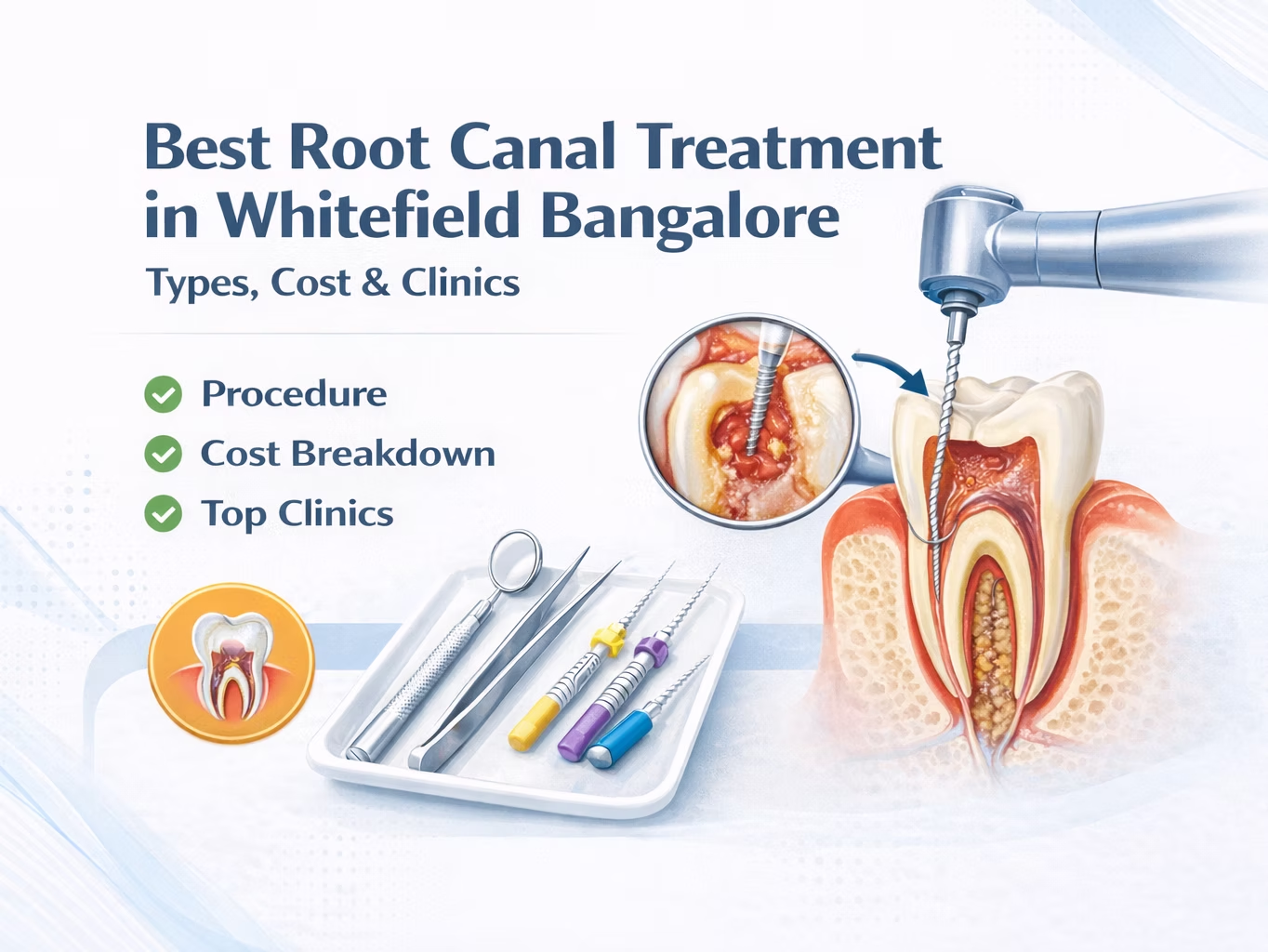
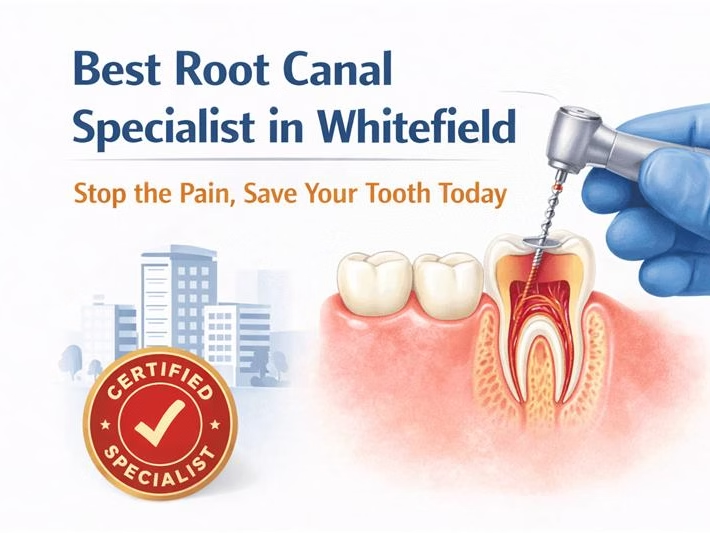
Removes infected pulp, disinfects canals, and seals the tooth from the inside. A crown then restores strength, preventing fracture. You keep your natural root and periodontal ligament your mouth’s built-in shock absorber.
Extraction
Removes the entire tooth (crown + root). The socket heals but the area loses bone over time. If you don’t replace the tooth, neighbouring teeth can tilt and the opposing tooth can over-erupt, altering your bite.
Long-Term Comparison (5–10 Years)
| Factor | Root Canal + Crown | Extraction (No Replacement) | Extraction + Implant | Extraction + Bridge |
| Chewing & Bite | Preserved | Bite drifts; opposite tooth over-erupts | Restored like a natural tooth | Restored but abutment teeth work harder |
| Bone Levels | Maintained at site | Progressive bone loss | Maintained at implant site | Site maintained; abutments may wear |
| Aesthetics | Natural & stable | Visible gap | Excellent | Good (depends on abutments) |
| Upfront Cost | Moderate | Low | High | Moderate–High |
| 5–10 Yr Costs | Often lower | Hidden orthodontic/occlusion costs later | Lower after placement | Potential abutment/bridge maintenance |
| Risks | Re-infection if no crown or poor seal | Drift, food trapping, TMJ strain | Surgery, integration failure (low risk) | Decay/wear on support teeth |
| Best When | Tooth is restorable | Tooth is hopeless & budget is tight short-term | Single missing tooth in load/visible area | Implant not feasible (bone, sinus, budget) |
Pain, Numbness & Recovery
- Root canal: Done under local anesthesia; most feel pressure, not pain. Soreness 24–72 hours; over-the-counter meds usually work. Crown placed within 1–2 weeks.
- Simple extraction: Numb during procedure. Swelling/soreness 2–5 days; soft diet; no smoking or straws while healing.
- Implant path: Either immediate or delayed (depending on bone/infection). Final crown typically after integration.
The Biology That Decides the Winner
- Periodontal ligament advantage (RCT): Keeping the natural ligament maintains micro-sensation and load distribution—better for long-term chewing balance.
- Bone metabolism (extraction): Without a root or implant, the jaw bone resorbs. Early socket preservation or implant planning reduces loss.
- Ferrule effect (key for RCT): You need enough healthy tooth above the gum line to grip a crown. No ferrule = poor RCT prognosis → extraction is prudent.
Money Talk: Total Cost of Ownership
- RCT + Crown: One-and-done for many years if maintained. Often cheaper over 5–10 years than extraction + quality replacement.
- Extraction without replacement: Lowest today, highest tomorrow—drifting teeth, bite changes, and future prosthetics can cost more.
- Implant: Highest upfront; excellent longevity and function when cared for.
- Bridge: Middle ground; faster than implants but may compromise adjacent teeth.
If a tooth is predictably restorable, saving it usually yields the best function-to-cost ratio long-term.
When Extraction Is the Right Call
- Vertical root fracture or crack below the gum line
- Severely decayed tooth with inadequate remaining structure (no ferrule)
- Advanced mobility from gum disease
- Repeated failures (post & core failure, perforation, non-negotiable canals with persistent infection)
- Systemic factors requiring shorter, simpler procedures (decided case-by-case)
If extracting, discuss immediate vs delayed replacement, socket grafting, and any sinus/nerve proximity considerations especially for molars and lower premolars.
Special Situations
- Wisdom teeth: Often extracted if infected, impacted, or non-functional; RCT rarely indicated.
- Front teeth (aesthetics): RCT often preferred if restorable; minimal prep, excellent cosmetic outcomes with modern crowns/veneers.
- Bruxism (teeth grinding): Raises fracture risk. RCT teeth need full-coverage crowns and a night guard.
- Diabetes/smokers: Healing may be slower. Strict hygiene and medical control improve outcomes for both RCT and implants.
- Pregnancy: Most urgent care can be safely timed; local anesthesia is generally safe—coordinate with your obstetrician.
Maintenance = Insurance
- 2× daily brushing + interdental cleaning
- Professional cleaning & exam every 6 months
- Night guard if you grind
- Don’t postpone crown placement after RCT—that’s the fracture trap.
Three Real-World Scenarios
- Deep decay, enough healthy walls left: RCT + crown → high long-term success, natural feel.
- Large crack into the root: Extract + plan implant → preserves bone and bite predictably.
- Badly broken molar, minimal ferrule, heavy grinding: Extraction + implant (or short bridge) beats a heroic RCT that’s likely to fail.
Decision Checklist (take this to your dentist)
- Is there an adequate ferrule (healthy tooth above gum) for a crown?
- Any root crack below the gum line?
- Gum and bone levels stable enough to support the tooth?
- What are my chewing loads (grinding, sport)?
- Do I need this tooth for a smile line or occlusion balance?
- If extraction: am I a candidate for immediate implant or do I need socket preservation first?
- 5–10 year cost and maintenance plan for each option?
Whitefield, Bangalore
Traffic is real and schedules are tight. If you need urgent root canal treatment near Whitefield, Varthur, Brookefield, ITPL, Kadugodi, look for dental clinics that offer same-day pain control with phased definitive care (so you don’t delay crowns or replacement steps).